Raising a child in a fast-paced world requires intentional focus, patience, and a commitment to nurturing emotional development. Empathy, the capacity to understand and share the feelings of another person, is not an innate skill that children simply possess or lack from birth. Instead, it is a capability that must be modeled, practiced, and reinforced throughout childhood. When parents lead with care, emotional presence, and active listening, they build a secure foundation where children feel valued and heard. This sense of safety enables young minds to extend compassion outward toward family members, peers, and their broader community. Ultimately, empathy serves as the emotional cornerstone for healthy social relationships, resilience, and thoughtful decision-making throughout life.
Parenting with empathy does not mean abandoning structure, boundaries, or disciplinary standards. Rather, it changes how guidance is delivered in the home. By choosing emotional connection before behavioral correction, parents teach children that their internal experiences are valid, even when specific behaviors require adjustment. When children recognize that their feelings are safe with caregivers, they are far less likely to resort to emotional suppression, anxiety, or disruptive outbursts. Cultivating empathy requires an integrated approach influencing every domain of a child’s environment, including home routines, physical comfort, educational settings, and social interactions. As caregivers navigate parenting, prioritizing empathy equips children with tools necessary to grow into caring adults.
Understanding the Core Foundations of Emotional Intelligence
Validating Feelings and Normalizing Big Emotions
Children experience the world through powerful emotional responses that can easily overwhelm their developing nervous systems. When a child experiences anger, disappointment, or sadness, their initial reaction is often intense and difficult to regulate independently. An empathetic parent approaches these moments not as disruptions to be suppressed, but as critical opportunities for connection and skill-building. Validating a child’s emotions means acknowledging their internal experience without judgment or an urgent attempt to fix the situation. When parents state validating phrases such as, “I see you are feeling deeply frustrated right now,” they help the child develop an emotional vocabulary while offering assurance that they are not alone.
Normalizing big emotions helps children understand that internal feelings are a natural part of human life, even when behaviors must be limited. Separating raw emotions from external actions teaches children vital self-regulation skills that prevent shame.
-
Label emotions accurately during stress to help children develop self-awareness.
-
Pause briefly before responding to emotional outbursts to remain calm.
-
Reassure children that having intense feelings is safe and normal.
-
Avoid dismissing minor complaints, as small disappointments feel large to kids.
-
Discuss emotional triggers during calm times to build coping strategies.
Modeling Genuine Compassion in Daily Routines
Children are perceptive observers who learn far more from watching adults navigate the world than from listening to instructions. How parents speak to family members, manage personal stress, and interact with community workers forms the primary framework for a child’s social understanding. When parents demonstrate consistent kindness in daily interactions, children naturally internalize those behaviors. This observational learning also shapes how parents select community resources and early care environments for their families. For instance, parents searching for a quality daycare or researching an infant’s daycare near me look for professional settings where staff members model patience, warmth, and active engagement. Seeing empathetic care across settings solidifies a child’s social safety.
Modeling empathy also requires parents to demonstrate humility by acknowledging mistakes and offering sincere apologies when losing patience. Admitting an error and seeking forgiveness teaches children that vulnerability, accountability, and repair are essential components of healthy relationships.
-
Kneel to maintain eye contact when having serious conversations with children.
-
Show courtesy and patience toward store clerks, service workers, and neighbors.
-
Offer a genuine apology when speaking harshly, modeling personal accountability.
-
Involve children in acts of kindness, like preparing meals for neighbors.
-
Discuss character emotions in storybooks, asking how characters might feel.
Creating an Environment of Safety and Structural Support
Establishing Secure and Nurturing Physical Spaces
A child’s emotional growth and capacity for empathy are deeply tied to their physical environment and sense of bodily security. When children feel safe, physically comfortable, and well-rested, their emotional capacity increases, allowing them to engage more thoughtfully with others. Creating a supportive physical environment involves designing spaces and routines that accommodate a child’s unique developmental and physical needs. For children with medical conditions, physical disabilities, or specialized sensory needs, purchasing appropriate accommodations like special needs beds can provide the essential support necessary for restorative sleep. Beyond home, structured group experiences such as summer camps provide valuable opportunities for children to build independence, self-confidence, and peer empathy under supportive mentors.
Establishing a stable physical environment lowers a child’s baseline anxiety, allowing them to redirect mental energy toward social learning, emotional regulation, and meaningful connections.
-
Maintain regular daily schedules to foster a strong sense of predictability.
-
Designate a quiet area where children can relax when overwhelmed.
-
Tailor physical sleeping arrangements to ensure proper comfort and safety.
-
Encourage outdoor playtime to support physical regulation and mood balance.
-
Offer age-appropriate choices regarding room organization to foster autonomy.
Prioritizing Holistic Wellness and Health
Emotional care cannot be separated from physical well-being. A child who experiences chronic fatigue, poor nutrition, or unaddressed physical discomfort will naturally struggle to regulate emotions and show patience toward others. Caring for a child holistically requires an approach that links physical health management with emotional support. Establishing a reliable relationship with a children’s health care professional ensures that developmental milestones are monitored and health issues are addressed quickly. As children grow and enroll in educational institutions like a private school, maintaining open communication between healthcare providers, educators, and parents ensures that physical and emotional needs are consistently supported across all environments.
When physical health is safeguarded through preventive care and healthy habits, children possess the stamina and nervous system stability needed to handle daily social stresses with empathy.
-
Schedule routine checkups to stay proactive about physical growth and health.
-
Provide balanced meals and snacks that sustain steady daily energy.
-
Create an environment where children freely discuss physical discomfort or fatigue.
-
Enforce consistent bedtime routines and limit screen exposure before sleep.
-
Prepare children for medical visits by explaining procedures clearly and calmly.
Guiding Social Development and Community Connections
Choosing Early Learning Environments That Prioritize Empathy
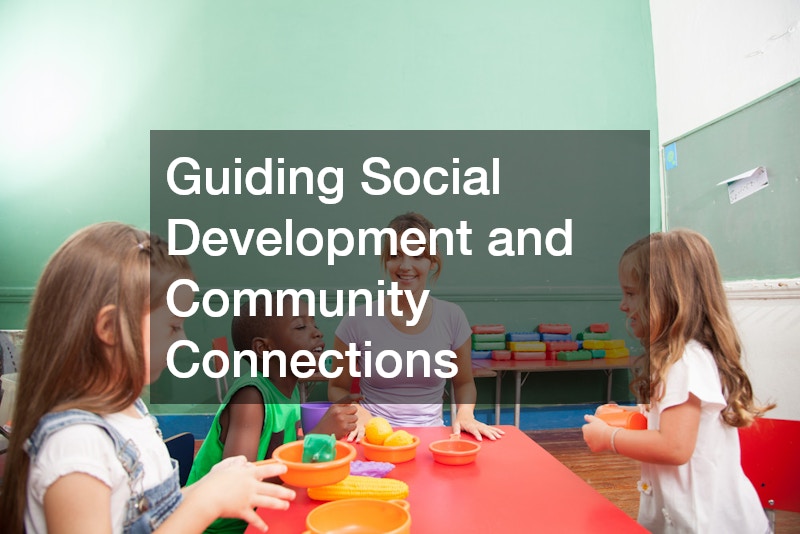
The early childhood educational environment plays a significant role in shaping a child’s social skills and emotional understanding outside the home. Entering a structured group setting requires young children to share resources, take turns, and navigate disagreements with peers. When parents search for early educational options, they often evaluate a private preschool or review lists of recommended preschools to identify programs that emphasize emotional development alongside foundational academics. An empathetic early childhood program integrates social-emotional learning into daily play, helping children learn how to recognize feelings in their classmates and practice peaceful conflict resolution.
When teachers and staff reflect empathetic principles practiced at home, children learn that empathy, respect, and mutual care are expected standards across all social environments.
-
Observe classroom interactions during visits to see how teachers handle conflicts.
-
Inquire about school policies regarding emotional regulation and conflict resolution.
-
Select educational settings prioritizing cooperative activities over competitive tasks.
-
Ask open-ended questions about school, focusing on how your child helped others.
-
Maintain regular contact with teachers to align home and school values.
Teaching Responsibility and Care Through Household Relationships
Developing empathy requires children to look beyond personal desires and attend to the needs of others. Caring for a household pet provides a practical daily opportunity for children to cultivate patience, tenderness, and practical caregiving skills. Animals depend entirely on human caregivers for food, comfort, and safety, making them ideal companions for teaching empathy. Working with a professional dog trainer can guide children on how to understand non-verbal cues, respect animal boundaries, and communicate gently. Furthermore, encouraging children to participate in routine pet care such as dog grooming demonstrates that caring for another living creature requires ongoing effort, gentle handling, and consistent attention.
These hands-on caregiving tasks demonstrate to children that empathy is an active responsibility rather than a passive feeling, building lifelong habits of practical kindness.
-
Assign manageable pet care tasks, like filling water dishes or organizing toys.
-
Teach children to respect animal space while pets eat, sleep, or rest.
-
Include children in pet training to practice patience and clear communication.
-
Demonstrate gentle touch and calm behavior whenever interacting with pets.
-
Talk about pet body language to help children read non-verbal cues.
Advanced Strategies for Long-Term Empathy and Self-Care
Navigating Conflict and Teaching Restorative Problem Solving
Disagreements, behavioral errors, and interpersonal conflicts are natural aspects of childhood development. The manner in which parents handle these moments determines whether a child internalizes shame or learns accountability and empathy. Traditional punitive measures often focus primarily on punishing negative behavior, causing children to become defensive. In contrast, restorative problem-solving focuses on repair and understanding. When a child hurts a sibling or friend, an empathetic parent guides the child to recognize the impact of their action and brainstorm constructive ways to restore the relationship.
Restorative conversations teach children that making mistakes is a normal part of learning, while taking responsibility and offering genuine repair are essential for maintaining healthy relationships.
-
Emphasize repairing relationships rather than relying solely on arbitrary punishments.
-
Ask guiding questions such as, “How did your action make your friend feel?”.
-
Assist children in creating meaningful ways to repair harm, like helpful gestures.
-
Maintain a calm tone during conflict resolution to prevent defensive reactions.
-
Reconnect warmly after resolving issues to reaffirm unconditional love.
Cultivating Perspective-Taking Through Storytelling and Play
Perspective-taking is the cognitive engine that drives emotional empathy. It enables a child to mentally step outside their own experience and imagine what another person is thinking or feeling. Storytelling, reading, and imaginative play are exceptionally effective tools for building this cognitive skill. When reading books together, parents can pause to discuss character facial expressions, motivations, and choices. During imaginative pretend play, children experiment with different roles and scenarios, allowing them to practice seeing situations from multiple viewpoints in a low-stakes environment.
By regularly engaging in perspective-taking activities, children build strong mental habits that make empathetic consideration a natural response during everyday interactions.
-
Pause during storytime to ask how specific characters might be feeling.
-
Participate in imaginative play where you and your child reverse roles.
-
Prompt children to consider alternative viewpoints during family discussions.
-
Watch educational media together and discuss character choices and emotions.
-
Praise your child whenever they spontaneously demonstrate perspective-taking in daily life.
Fostering Inclusive Attitudes and Broadening Social Circles
Empathy should not be limited to immediate family members or familiar friends. True emotional maturity involves extending compassion to individuals from diverse backgrounds, cultures, and life circumstances. Parents can foster inclusive attitudes by deliberately exposing children to diverse perspectives and teaching them to value differences. Encouraging children to welcome new classmates, stand up against exclusionary behavior, and seek friendships with peers who have different abilities prevents prejudice from taking root. When children realize that every person has a unique story and inherent worth, their capacity for empathy expands significantly.
Building a broad circle of care prepares children to thrive in a diverse world with open-mindedness, respect, and a commitment to fairness.
-
Introduce books and stories highlighting diverse cultures and life experiences.
-
Encourage your child to invite isolated peers to join playground games.
-
Discuss community needs openly and participate in age-appropriate volunteer work.
-
Address biased statements immediately with calm, compassionate explanations.
-
Celebrate personal differences as unique strengths that enrich the community.
Maintaining Parental Well-Being to Prevent Emotional Burnout
Parenting with empathy is deeply fulfilling, but it also requires significant emotional energy. To consistently offer patience, warmth, and understanding to children, parents must take active steps to maintain their own well-being. It is impossible to provide thoughtful care when operating from a state of complete emotional exhaustion. Parental self-care is not a selfish luxury, but a fundamental requirement for maintaining a healthy, empathetic home environment. Establishing healthy personal boundaries, seeking community support, and practicing self-compassion allow parents to replenish their emotional capacity.
When parents model healthy stress management and self-care, they demonstrate to their children that caring for oneself is just as vital as showing compassion to others.
-
Set aside daily personal time for rest, exercise, or enjoyable hobbies.
-
Build a reliable support network of friends, family, or parenting groups.
-
Practice self-compassion when parenting challenges do not go as planned.
-
Communicate personal needs and boundaries clearly within the family.
-
Seek professional guidance when feeling overwhelmed by ongoing stress.
Raising a child with empathy and care is a continuous journey that yields lifelong benefits for the entire family. By establishing safe physical environments, prioritizing overall health, validating complex emotions, and selecting supportive educational settings, parents create a solid foundation for deep emotional growth. Through daily modeling, restorative conflict resolution, and shared acts of community care, children learn that empathy is not merely an abstract concept, but an active practice that enriches human relationships. As parents navigate the changing seasons of raising children, maintaining self-compassion and prioritizing emotional connection ensures that kindness remains the defining characteristic of the home. Ultimately, the empathy nurtured in children today creates a more caring, understanding, and compassionate world for generations to come.