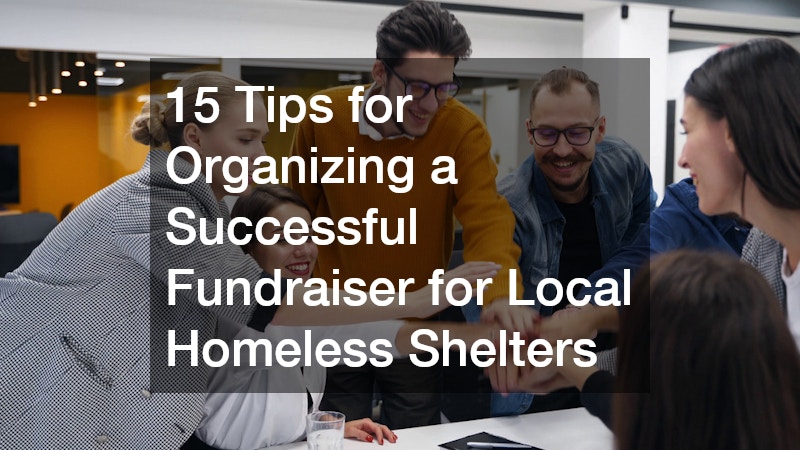
Organizing a successful fundraiser for local homeless shelters is a powerful way to support vulnerable members of your community. Whether you’re aiming to provide meals, clothing, shelter, or long-term resources, thoughtful planning is essential to maximize impact. Fundraisers not only generate vital financial support but also raise awareness, foster community engagement, and inspire ongoing involvement. By setting clear goals, creating a welcoming and engaging event, and leveraging volunteers, sponsors, and media, you can make a tangible difference. This guide provides 15 practical tips to help you plan a fundraiser that is both meaningful and effective.

1. Define Your Purpose and Fundraising Goals
Every successful fundraiser begins with a clear and compelling purpose. Start by identifying exactly what your event aims to support—such as funding warm meals, emergency supplies, hygiene kits, shelter maintenance, mental health services, or long-term housing programs. Speak with the shelter’s leadership to understand their most urgent needs so your fundraiser can directly address them. Once your purpose is clear, set a realistic financial goal. Consider past fundraising results, community participation levels, and your event format. A well-defined goal motivates donors and provides a measurable benchmark for success. Transparency also builds trust: when supporters know exactly where their money is going and how it will help people experiencing homelessness, they are far more likely to contribute. A clearly stated purpose brings structure to your planning process, encourages accountability, and ensures your efforts consistently align with the shelter’s mission.
2. Choose the Right Type of Fundraising Event
The type of event you choose can make or break your fundraiser’s success. Select a format that suits your community’s interests and the resources you have available. Options include charity dinners, silent auctions, benefit concerts, walk-a-thons, bake sales, or online crowdfunding events. If your goal is broad participation, consider a family-friendly community event. For higher financial impact, focus on sponsorship-driven events or auctions with donated items. Evaluate factors like venue availability, weather, volunteer support, and required permits. The right event should be easy to communicate, effortless to manage, and appealing to your target donors, such as local private schools, community-wide organizations, and local clubs. Also consider virtual or hybrid events to include wider audiences. When your event aligns with donor preferences and community culture, participation increases and fundraising goals become much more attainable.
3. Build a Strong Planning Committee
Behind every successful fundraiser is a reliable planning committee. Gather a team of passionate individuals who believe in the mission of helping local homeless shelters. Assign roles based on strengths—event management, marketing, sponsorship outreach, volunteer coordination, and finance tracking. Schedule regular meetings where committee members can collaborate, address challenges, and track progress. Encourage open communication and clear decision-making to prevent confusion and delays. A strong committee reduces the workload, boosts creativity, and provides the organizational structure necessary for large events. Don’t hesitate to recruit professionals such as graphic designers, accountants, or marketing specialists who may be willing to donate their time or offer discounted services. The more skill and support your committee offers, the smoother and more effective your fundraiser will be.
4. Secure Community Partnerships and Sponsorships
Partnerships and sponsorships can significantly increase your event’s impact. Reach out to local businesses, churches, civic groups, and nonprofits that share an interest in supporting vulnerable populations. Offer sponsorship tiers with clear benefits such as logo placement, event signage, social media mentions, or speaking opportunities during the event. Many companies allocate funds specifically for community initiatives and may be willing to donate supplies, food, equipment, printing services, or raffle prizes. For example, a local BBQ catering company may be willing to donate a meal for the event. Partnerships reduce expenses, provide credibility, and help expand your event’s reach. Be professional, clear, and appreciative when approaching potential sponsors. Provide them with a simple packet detailing the event’s purpose, goals, and community impact. Strong partnerships strengthen your event, build lasting relationships, and create a shared commitment to helping people experiencing homelessness.

5. Promote Your Event Across Multiple Platforms
Effective promotion and local promotional items ensure that your fundraiser attracts attention and participation. Use a combination of online and offline marketing strategies to reach a wide audience. Social media platforms—such as Facebook, Instagram, and community groups—are ideal for spreading the word through event pages, updates, videos, and shareable posts. Email newsletters, local newspapers, radio stations, restaurant, and community bulletin boards can also increase visibility. Encourage supporters to share information within their networks to amplify your reach. Use consistent branding, including event logos and a memorable tagline, to make your fundraiser recognizable. Highlight stories from the shelter or testimonials from volunteers to create emotional connection and urgency. A strong promotional strategy ensures your message resonates and encourages community involvement.
6. Encourage Donor Engagement Through Storytelling
Storytelling is a powerful tool for inspiring action and compassion. Share real stories from your local homeless shelter—whether it’s about families rebuilding their lives, individuals finding permanent housing, or volunteers making a difference. Always use stories ethically, respectfully, and with permission. Emphasize the shelter’s achievements and the positive changes made possible through community support. Storytelling helps donors visualize the real impact of their contributions and creates emotional investment in the cause. Highlight specific needs, such as blankets, food supplies, or transitional housing, and explain how donations directly support them. Whether you’re using social media, event speeches, brochures, or videos, heartfelt stories turn abstract issues into relatable human experiences, motivating supporters to give generously and stay engaged long after the event ends.
7. Organize Volunteers Effectively
Volunteers play a crucial role in ensuring your fundraiser for a homeless teen program runs smoothly. Begin by identifying how many volunteers you need and what tasks they will handle—setup, registration, catering services, cleanup, donation collection, and more. Create clear job descriptions to help volunteers understand expectations and responsibilities. Hold a training session before the event to answer questions, build motivation, and ensure everyone is prepared. Provide a detailed schedule so volunteers know where to be and when. On event day, have a volunteer coordinator available to assist with problems, assign additional tasks, and maintain organization. Recognize and thank volunteers for their time and effort, both during and after the event. When your volunteers feel appreciated and supported, they are more likely to stay committed and help your fundraiser succeed.
8. Focus on Creating a Positive Guest Experience
A successful fundraiser isn’t just about raising money—it’s about creating a memorable, enjoyable experience for guests. Make sure your event is well-organized from start to finish: clear signage, easy registration, friendly volunteers, and smooth activity flow all contribute to guest satisfaction. Consider offering entertainment, interactive elements, or inspiring presentations that highlight the shelter’s mission. Provide comfortable seating, quality food from a corporate catering service, and a clean, inviting atmosphere. Use visuals like photo boards, artwork from shelter residents, or informational displays to connect attendees to the cause. When guests feel welcomed, informed, and inspired, they are more likely to give generously, attend future events, and share the experience with others in the community.

9. Provide Easy and Multiple Donation Options
To maximize contributions, make the donation process simple and convenient. Offer multiple ways for attendees and supporters to give: cash, credit card, mobile payment apps, online donation portals, and recurring donation options. Display QR codes throughout the event so donors can give instantly with their phones. Consider hosting raffles, silent auctions, or merchandise sales for additional fundraising streams. Provide clear signage explaining how donations will be used and include suggested donation amounts to guide contributors. After the event, send follow-up emails with donation links for those who couldn’t attend but still want to support the cause. Making donations accessible ensures that everyone, regardless of convenience or preference, can contribute to your mission of helping individuals experiencing homelessness.
10. Follow Up, Express Gratitude, and Share Results
After your fundraiser concludes, the next step is building long-term relationships with participants, donors, and sponsors. Send personalized thank-you messages and even gift chocolates to show appreciation for their generosity and involvement. Share the total amount raised, photos from the event, and updates from the homeless teen shelter to demonstrate the real impact of their contributions. Transparency builds trust and encourages ongoing support, whether through future fundraisers or year-round donations. Recognize volunteers publicly, acknowledge sponsors on social media, and provide certificates of appreciation when appropriate. Following up thoughtfully strengthens community connections and sets the stage for even more successful fundraising events in the future.
11. Leverage Local Media for Greater Reach
Local media outlets—newspapers, radio stations, TV channels, and online community blogs—can amplify your fundraiser’s reach significantly. Draft a compelling press release highlighting the event’s purpose, date, location, and how it will benefit the local homeless shelter. Include impactful stories, quotes from shelter staff or beneficiaries, and information about unique activities or entertainment. Send the release to media contacts well in advance and follow up with phone calls or emails to ensure coverage. Media attention not only attracts more participants but also encourages additional donations and sponsorships. Engaging local media lends credibility to your event and raises awareness about homelessness in your community, creating a broader impact beyond the fundraiser itself.

12. Incorporate Interactive and Educational Elements
Interactive activities and educational components can make your fundraiser both enjoyable and informative. Consider hosting workshops, live demonstrations, or interactive games that teach attendees about homelessness, resources available, and ways to help. You could also include Q&A sessions with shelter staff or volunteers sharing firsthand experiences. Visual displays or virtual reality simulations can create empathy and understanding for the challenges faced by homeless individuals. Interactive elements keep attendees engaged and create lasting impressions, turning passive supporters into active advocates. By combining fundraising with education, your event becomes a platform for awareness, encouraging attendees to contribute not just financially but also through volunteering and advocacy.
13. Plan for Accessibility and Inclusivity
Ensuring your fundraiser is accessible and inclusive maximizes participation and demonstrates community care. Choose venues that accommodate people with disabilities, provide clear signage, and consider transportation or parking options. Offer materials in multiple languages if your community is diverse, and create dietary accommodations for meals or refreshments. Inclusive events also respect cultural and religious differences, ensuring all attendees feel welcome. Consider online participation options for those unable to attend in person. By addressing accessibility and inclusivity from the start, you create an environment where everyone can engage, donate, and feel valued, ultimately broadening your reach and enhancing the overall success of your fundraiser.
14. Evaluate and Learn from Each Fundraiser
After your event concludes, conducting a thorough evaluation is essential for growth and future success. Gather feedback from attendees, volunteers, sponsors, and your planning committee to understand what worked well and what could be improved. Analyze financial outcomes, donation trends, and engagement metrics to identify strengths and weaknesses. Document lessons learned, noting logistical challenges, promotional strategies, and donor preferences. Use this information to refine processes, enhance guest experience, and increase fundraising efficiency for future events. Continuous evaluation ensures that each fundraiser builds upon the previous one, creating increasingly effective campaigns that support local homeless shelters and deepen community impact over time.
15. Utilize Social Media for Post-Event Engagement
Social media doesn’t have to stop working once your fundraiser ends—it’s a powerful tool for sustaining engagement. Share photos, videos, and highlights from the event to celebrate successes and show supporters the impact of their contributions. Tag volunteers, sponsors, and participants to encourage sharing and extend reach. Post updates from the shelter demonstrating how donations are being used, such as providing meals, clothing, or housing support. Create a sense of ongoing community by inviting followers to volunteer, attend future fundraising corporate events, or participate in campaigns. Consistent post-event engagement keeps momentum alive, strengthens relationships, and ensures long-term support for your cause.
A well-planned fundraiser for local homeless shelters can have a lasting impact on both the community and the individuals it serves. By combining thoughtful organization, engaging activities, strong partnerships, and clear communication, you create an event that inspires generosity and awareness. Remember to show gratitude, follow up with supporters, and evaluate outcomes to improve future efforts. Every donation, volunteer hour, and act of advocacy contributes to a safer, more supportive environment for those experiencing homelessness. With dedication and creativity, your fundraiser can truly become a catalyst for positive change and community solidarity.